More than 1.4 million North Carolinians rely on SNAP benefits to help pay for groceries.
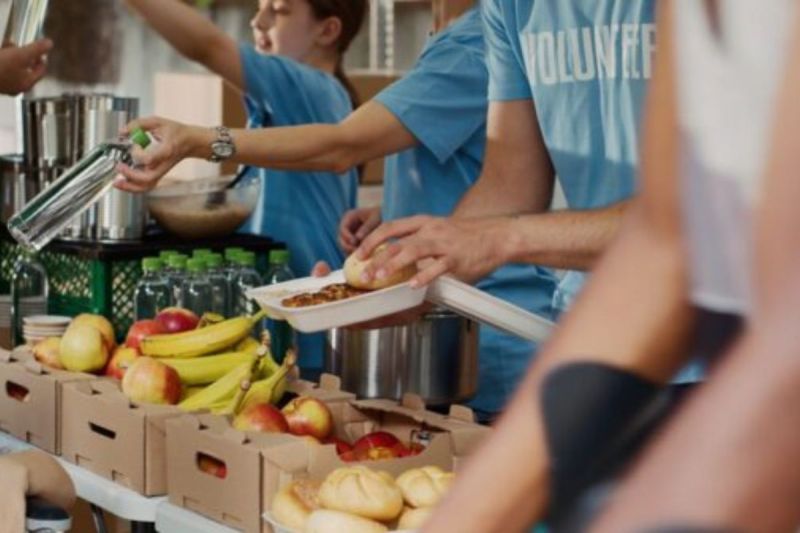
Boxes and tractor trailers loaded with donated food move quickly through volunteers’ hands inside a Charlotte warehouse where frozen meat, fresh produce, and cartons of eggs are distributed when they’re available.
This is where families come when groceries run out—sooner than later.
So when President Donald Trump said during his State of the Union address that his administration had “lifted 2.4 million Americans—a record—off of food stamps” in one year, the comment landed differently here.
“I would maybe push back on the word lifted,” said Tina Postel, CEO of Nourish Up, which runs a network of food pantries across Mecklenburg County.
“Lifted, to me, means helping and offering a hand up instead of a handout,” she said. “What we’re experiencing from people that now need our services—they haven’t been lifted away from SNAP benefits, they’ve had their SNAP benefits dragged away from them. So having something dragged away from you feels a bit different than having something ‘lifted’ away from you.”
Across the country, nearly 42 million Americans rely on the Supplemental Nutrition Assistance Program, better known as SNAP, to help pay for groceries. Because of Trump’s “One Big Beautiful Bill,” advocated by many Republicans, roughly 2.4 million are expected to lose eligibility under expanded work requirements included in recent federal legislation, according to the Center on Budget and Policy Priorities.
Under the new rules, adults ages 55 to 65 and parents whose youngest children are at least 14 years old must document a minimum of 80 hours per month of work, education, or volunteer activity to continue receiving benefits.
But losing SNAP benefits doesn’t mean families stop needing food.
READ MORE: NC food banks can’t fill the hunger gap caused by federal SNAP cuts, nonprofit leaders say
“Food doesn’t just magically appear for people who are pulled away from their food stamp dollars,” Postel said. “We’re a small, lean nonprofit organization. We can not do the job of the federal government.”
The demand for food help keeps rising
The scale of SNAP assistance is far larger than what charitable food programs can provide. According to Feeding America, a national network of more than 250 food banks, 20 statewide food bank associations, food pantries, and meal programs, SNAP provides nine meals for every one meal distributed by food banks.
In North Carolina, more than 1.4 million North Carolinians receive the critical food assistance of SNAP benefits, according to the state Department of Health and Human Services. That’s 1 in 8 North Carolinians, including more than 580,000 children.
At Nourish Up, formerly known as Loaves & Fishes/Friendship Trays, the numbers tell part of the story.
According to the Charlotte nonprofit, the organization operates more than 35 food pantries across Mecklenburg County, provides grocery home delivery, and runs the county’s primary Meals on Wheels program.
In 2024, Nourish Up provided groceries to 164,608 North Carolinians, the highest number in its 50-year history. But that number rose further after last year, when the organization provided groceries to 169,099 North Carolina residents, nearly half of them children or seniors.
According to Nourish Up’s 2025 data, disparities in food insecurity run high among Black and Latino families, who made up 47% and 40% of the recipient pool, respectively. Only 7% of beneficiaries were classified as white, while the remaining were marked “other.”
Postel said many of the families coming through their doors are working households.
“They’re employed,” Postel said. “They’re just not making a living wage.”
When families lose those SNAP benefits, Postel said, many turn to food pantries like hers to fill the gap.
“Being off SNAP for far too many families means that they have to find other resources, that they have to lean on pantry networks like us,” Postel said. “They have to lean on friends and neighbors in order to put food on their table.”
For many children, hunger shows up at school
Sometimes the signs appear at school.
RELATED: Food insecurity is hitting thousands of NC children—and it’s following them into the classroom
Teachers and social workers with Charlotte-Mecklenburg Schools regularly refer families to Nourish Up, especially when school is out of session.
“Summer is a huge month for kids,” Postel said. “We serve more children in July than in any other month because they’re not getting that free or [low-cost] breakfast and lunch in school.”
For Postel, childhood food assistance is personal. She grew up in a food-insecure household, though she said she didn’t fully understand it at the time.
Her family relied on federal food assistance programs and free school meals. She remembers government-issued blocks of cheese, large cans of peanut butter, and her mother paying for groceries when SNAP benefits looked like paper food stamps instead of the electronic benefits cards seen today. On average, the NCDHHS said SNAP benefits equal about $5.70 per person per day.
“I was supported by those government safety nets and hard working parents who struggled to make ends meet,” she said.
That experience shapes how she views the debate around food assistance today.
“There’s enough that you have to worry about being a parent,” Postel said. “You should not be worried about making sure that your children have enough food to eat.”
RELATED: Opinion: My family could end up living under a bridge if Republicans cut Medicaid and SNAP