Film industry leaders in Wilmington say that federal incentives could lure movie productions back to U.S. soil, and make NC’s Port City into a Hollywood destination again.
The 1997 horror film “I Know What You Did Last Summer,” which was filmed in Southport, is one of the best-known titles to shoot in the Wilmington area.
So when Wilmington lost out on the 2025 sequel of “I Know What You Did Last Summer,” which shot overseas, it kind of stuck in Kirk Englebright’s craw.
Englebright, who’s the CEO of Wilmington’s Dark Horse Stages — which was founded in 2020 and underwent a major expansion in 2024 — said the Wilmington area was in the running to host the horror film sequel in 2024, but the production ended up in Australia because of that country’s generous film incentive.
[optin-monster slug=”rgdyr2iwoc6i4fjovuok” followrules=”true”]
It’s one of the things that convinced Englebright that, after several down years for the film and television industry in Wilmington and nationwide, the time of waiting and hoping for things to improve has passed.
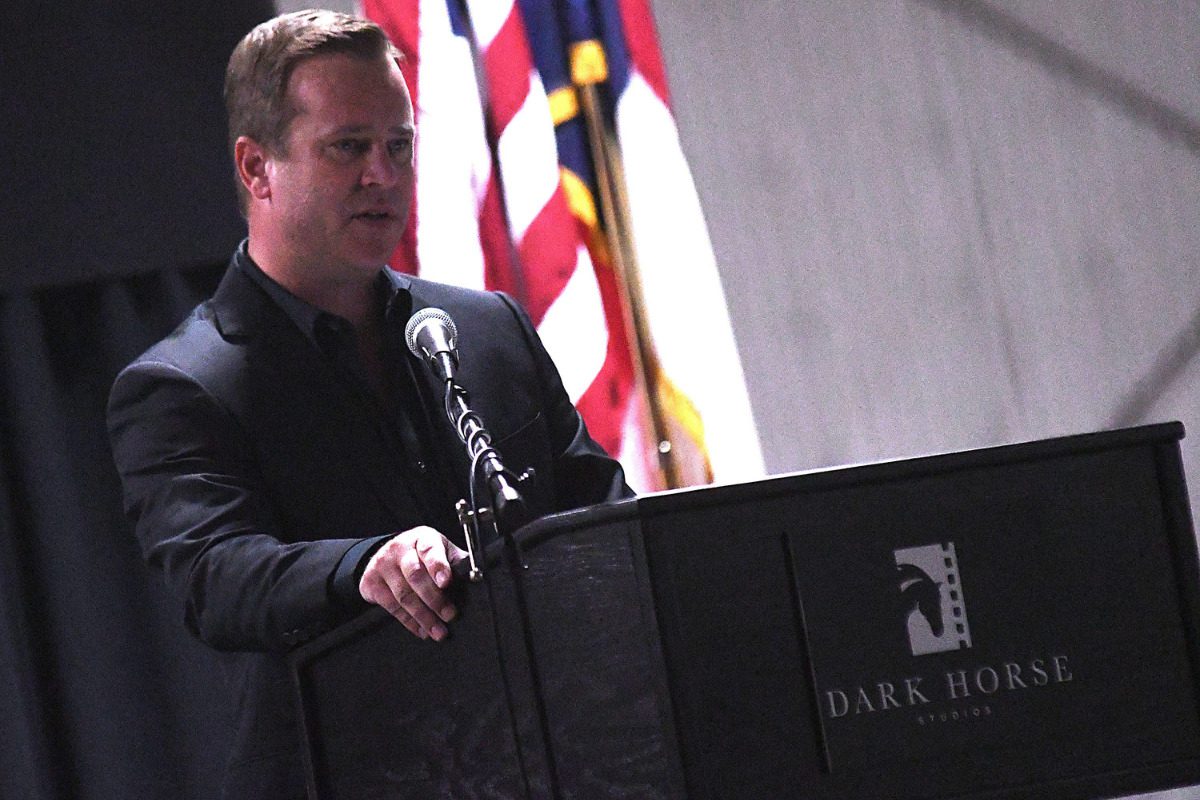
“Right now, we’re not getting ROI (return on investment). Stages and studios are sitting empty for years,” Englebright said. “We’re losing millions and billions of dollars. Crews are not working. Someone has to act.”
With many American production companies finding it cheaper to shoot films and TV shows overseas in countries like Australia (and Canada, England, South Africa and several others) that offer generous tax incentives, Englebright recently joined a national group that’s pushing for a federal film incentive it says would make the United States more competitive.
Englebright is the North Carolina representative for the Coalition for American Production, or CAP, a group representing small businesses supported by the film industry that formed in 2025. On Feb. 10-11, CAP will be in Washington, D.C., to lobby elected officials in hopes of building momentum for a federal film incentive.
“We need to get production back on U.S. soil,” Englebright said. “And we need to get in front of Congress and make our case.”
According to CAP’s website, “The last few years have been incredibly challenging for our industry. The United States hasn’t kept pace with global competition to attract production. … A national tax incentive will level the playing field and keep the U.S. as the premiere location for film production.”
Englebright said that one argument against a federal incentive, and incentives in general, is that the money goes into the pockets of well-paid actors.
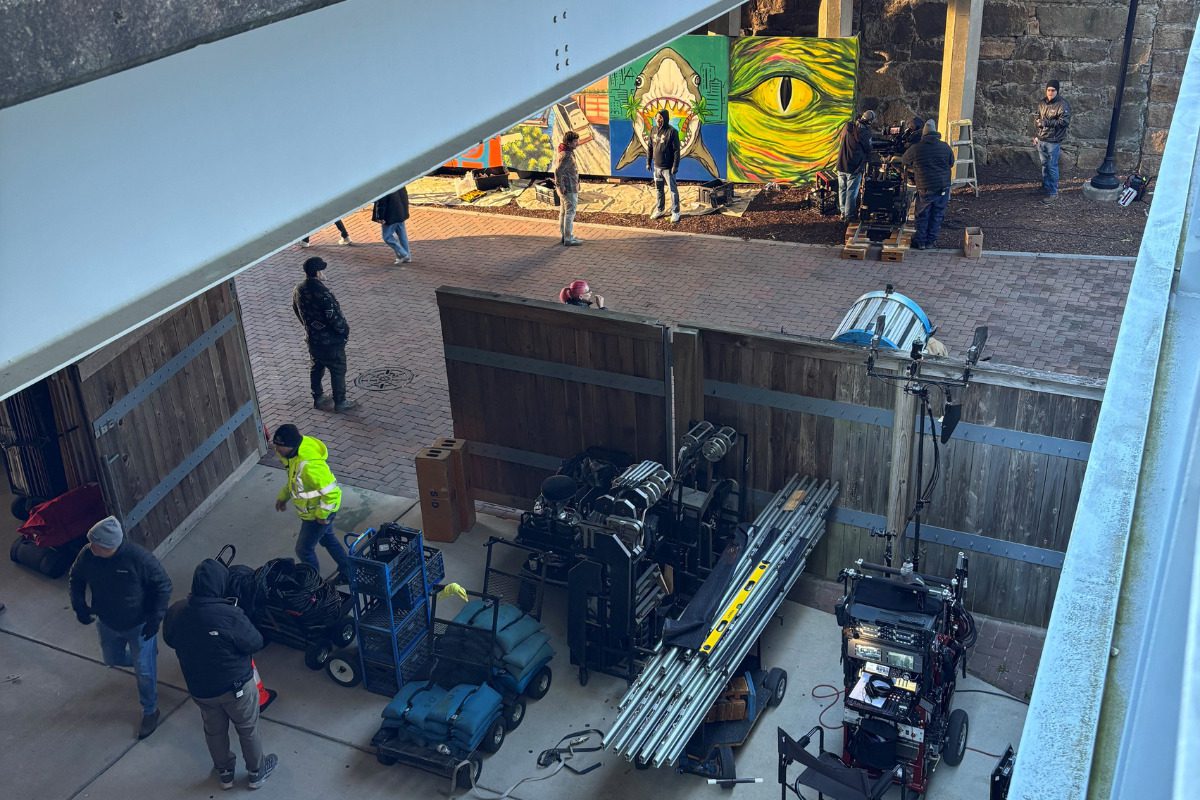
“It’s not about the stars. It’s about the people behind the camera,” Englebright said. “They make good wages. When they’re working. … These are W-2 jobs, significant employment.”
A federal incentive, Englebright said, would “protect jobs here in the United States.”
According to a December 2025 story in entertainment industry publication Deadline, CAP officials were in Washington in December for meetings with White House officials.
President Donald J. Trump has proposed putting a 100% tariff on films made overseas, but according to Deadline, CAP representatives think a 15% to 20% federal tax credit for qualifying productions filmed in the U.S. would help the industry more than a large tariff.
The credit would be “stackable,” meaning that individual states could still offer additional incentives to compete for business.
Many in the industry, including Englebright, say that North Carolina needs to sweeten its incentive, which has lagged behind those of other states in recent years.
If a federal incentive was passed, along with an enhanced state incentive, North Carolina “would become a powerhouse again,” Englebright said.
Many, if not most, in the industry are taking a wait-and-see approach in regard to a federal incentive, with few production companies or businesses supported by the industry taking a public stand.
Guy Gaster, director of the N.C. Film Office, which promotes the state as a filming location, wrote in an email that he has “certainly heard talks about the potential of a federal incentive, but that is not something that the N.C. Film Office is currently working directly on. … Generally speaking, we would likely be in favor of any action that helps bring more projects and job opportunities to North Carolina.”
For Englebright, who often makes trips to Los Angeles to meet with film industry executives, a national incentive could be the best way to reinvigorate the film industry, both in Wilmington and nationwide.
“When I go to L.A., they all tell me the same thing,” Englebright said. “‘We’re chasing the incentive. You can have the best crew base in the world, but it doesn’t work without the incentive.’”
Reporting by John Staton, Wilmington StarNews / Wilmington StarNews
USA TODAY Network via Reuters Connect