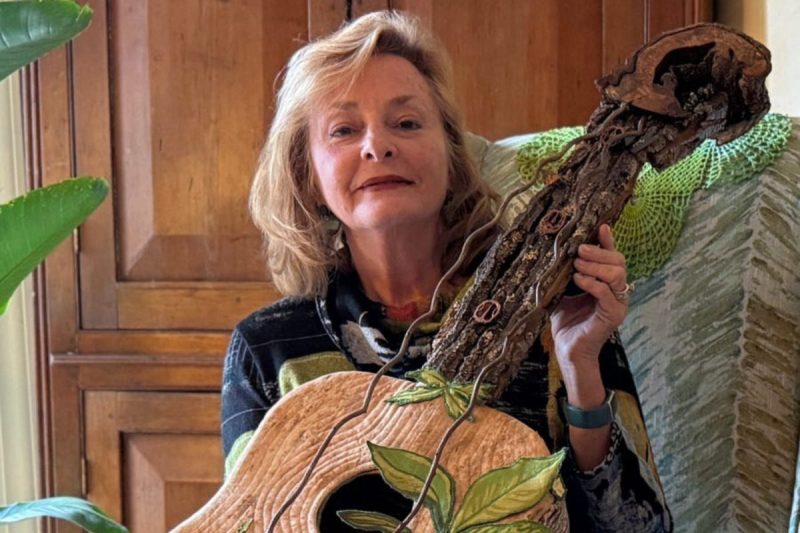
Western North Carolina artist Karen-Eve Bayne learned to give back when she was growing up. Today, she’s doing that with a plan that conserves huge tracts near the Green River Game Land.
Karen-Eve Bayne grew up in a close-knit community in the mountains near Zirconia, on a small farm on the headwaters of the Green River.
“If somebody fell sick, we took them food,” she says. “If you had an operation, we took your kids in. If something happened with my parents, we’d go stay at the neighbors’ house for a while.”
Her voice breaks a little when she says, “It was very community minded. And I was disappointed later when I grew up and found out that’s not how the world operates.”
Still, that is the way she works.
Her ethic of community is why she founded a nonprofit called Storytelling, Education, and Arts Programs (or STEAP) that features local storytellers and artists, especially lesser known or minority artists. It’s also why she conveyed 62 acres bordering the Green River Game Lands, near Saluda, to Conserving Carolina with a vision for future public access.
Karen-Eve’s family has lived in these mountains since the early 1800s. When she decided to conserve her land, she felt that’s what her mom and dad would have wanted. And it’s what her seventh-great-grandfather would want — the one who first came here, when he was exiled from Scotland. At the same time, she was thinking of generations to come.
“I want my great-grandchildren and anybody else’s great-grandchildren to be able to walk or have a picnic on this property,” she says.
“It was very community minded. And I was disappointed later when I grew up and found out that’s not how the world operates.”
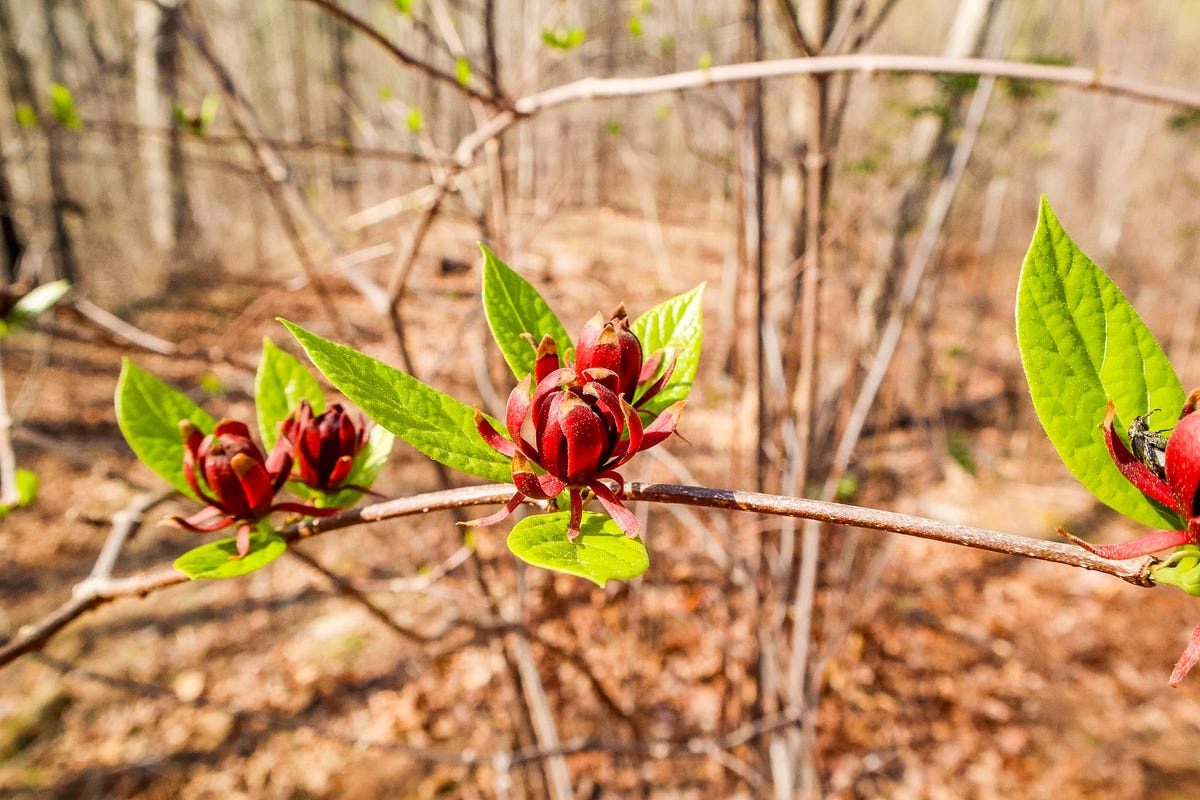
Karen-Eve grew up in a world of natural wonders — and she wants others to know these wonders too. From her mother, she learned the names of wildflowers like ladyslippers, bloodroot, and ghost pipe. She shared the woods with snails and salamanders, bears and foxes.
Today, she draws on these roots as a fabric artist whose work depicts Appalachia’s wild communities. Whether through art or through conservation, she sees the beauty of nature as something that was given to her to share.
Far from Appalachian home
At the age of 42, Karen-Eve was very far from that Appalachian home. Imagine that you are the mother of a 4-year-old, living thousands of miles from family, in another country. You’re exploring new possibilities for your life’s work. And suddenly your husband dies.
When she was young, Karen-Eve says, she couldn’t wait to get out of Henderson County. Her mother taught her to be curious. She even got the first bookmobile to travel way up Green River Road — and through those books, Karen-Eve knew there was a big world out there.
After graduating from East Henderson High School, she was the first member of her family to finish college. Work took her to Washington D.C. and later England. She was successful in her career and had a wonderful husband and child. But she didn’t like how her corporate job sometimes clashed with her ethics.
Then a storyteller friend shared the tale of the Loathley Lady that opened doors for her.
King Arthur was charged to answer a riddle, with his life on the line: “What do women most desire?” A hideous old woman told Arthur that she could tell him — but only if his favorite knight, Sir Gawain, would marry her. To save the king, Sir Gawain agreed. On their wedding night, he was surprised when the hag transformed into a beautiful bride. She told him she was under a curse and that he had a choice: She could be ugly by day and beautiful in his bed, or the other way around.
But Sir Gawain told her he would not choose for her. It was her life. This answer freed the loathsome lady from the curse — and it was also the answer to the riddle that saved King Arthur.
“What do women want?” Karen-Eve recounts. “The answer was to make their own decisions. And ain’t that the truth!”
She realized that, in her career, she wasn’t making her own decisions. So, she changed course. She left a London job and went to divinity school. She studied storytelling.
Then, her husband got the flu, which became pneumonia. In less than three weeks, at the age of 49, he was gone.
Karen-Eve says, “So there I was a widow, in the middle of doing a degree, 3,000 miles away, with a 4-year-old.”
Hard years followed. For a time, she stayed in England, so she wouldn’t upend her daughter’s life. Ultimately, she found that she didn’t want to die in a foreign land.
A friend asked what would make her change her life — a person, a place, or a profession?
Karen-Eve realized that, for her, the answer was: “I’m the person, I will create a profession, but the place is North Carolina. I think the epigenetics are built into me to migrate back to where I am from and where my people came from.”
Like a sea turtle or a salmon crossing oceans to return to where they started, she knew: it was time to go home.
Joy and education in the mountains
“Farming is a hard life,” Karen-Eve says. “People romanticize it but it’s hard work. It was a hard childhood and also a very good childhood. I was so fortunate to grow up in the beautiful mountains here and to do everything that we did on the land and in the community.”
Her family grew vegetables and put them up for winter. They raised animals. They made soap.
Her father was a bricklayer and farmer. Although clever, he had barely enough education to read and write. He was also an innovator, one of the first farmers in Henderson County to grow and sell ornamental trees.
Her mother, who had a high school degree, led 4-H and taught constantly. “If we went out together, she’d teach me the wildflowers and the animals and the insects,” Karen-Eve says. “She helped probably 500 kids make wildflower collections and nut collections and learn tree identification.”
As an adult, back in North Carolina, Karen-Eve drew on this knowledge of the Appalachian woods in her artwork. Her quilts and fabric sculptures show scenes full of detailed plants and animals. In 2017, she married Peter Gollup. Between her work as a fabric artist and his as a furniture maker, there are few objects in their Hendersonville home that are not a work of art.
Karen-Eve also supports the local community of artists through STEAP. Among other initiatives, STEAP produces the podcast “Hendo Public Art Tour”, featuring local storytellers describing the murals around town. The nonprofit also invests in diverse artists and supported the first murals in Henderson County to show people with brown skin.
Over the years, her family had lost the original land grant from the 1800s, on the headwaters of the Green River, but her dad bought some of it back and this land now belongs to her relatives.
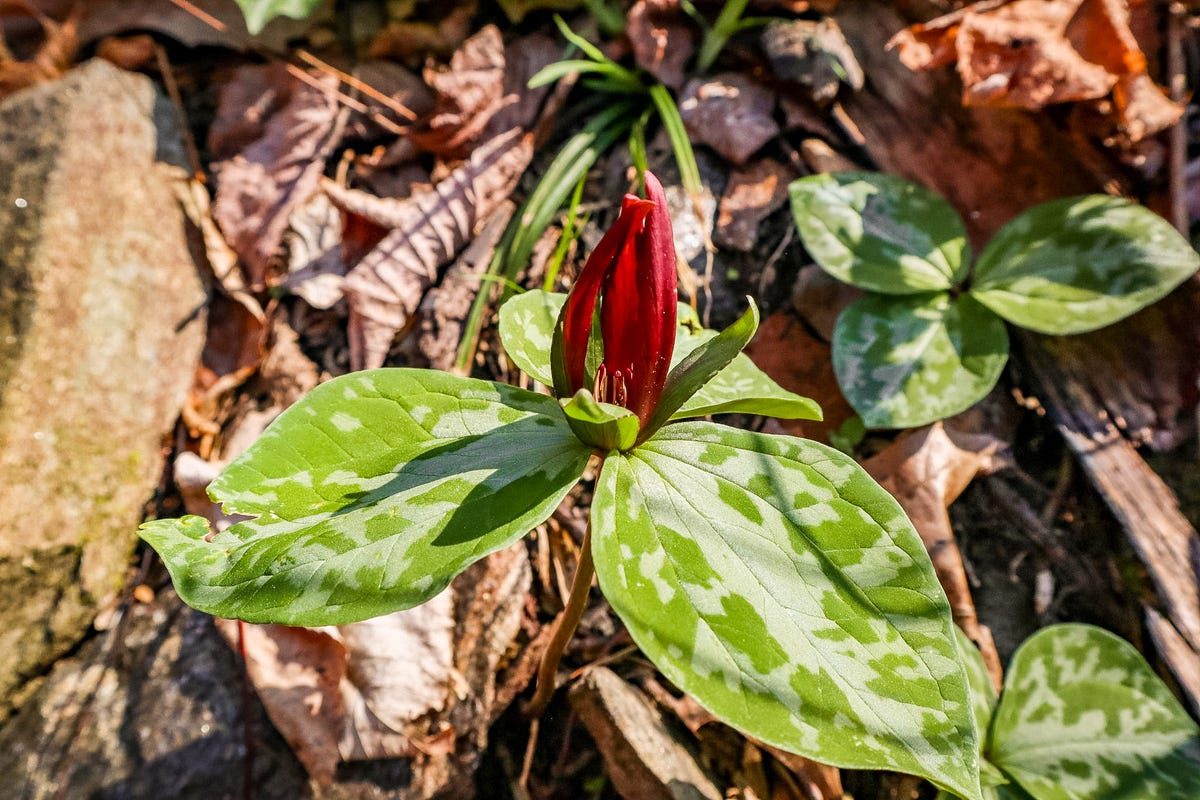
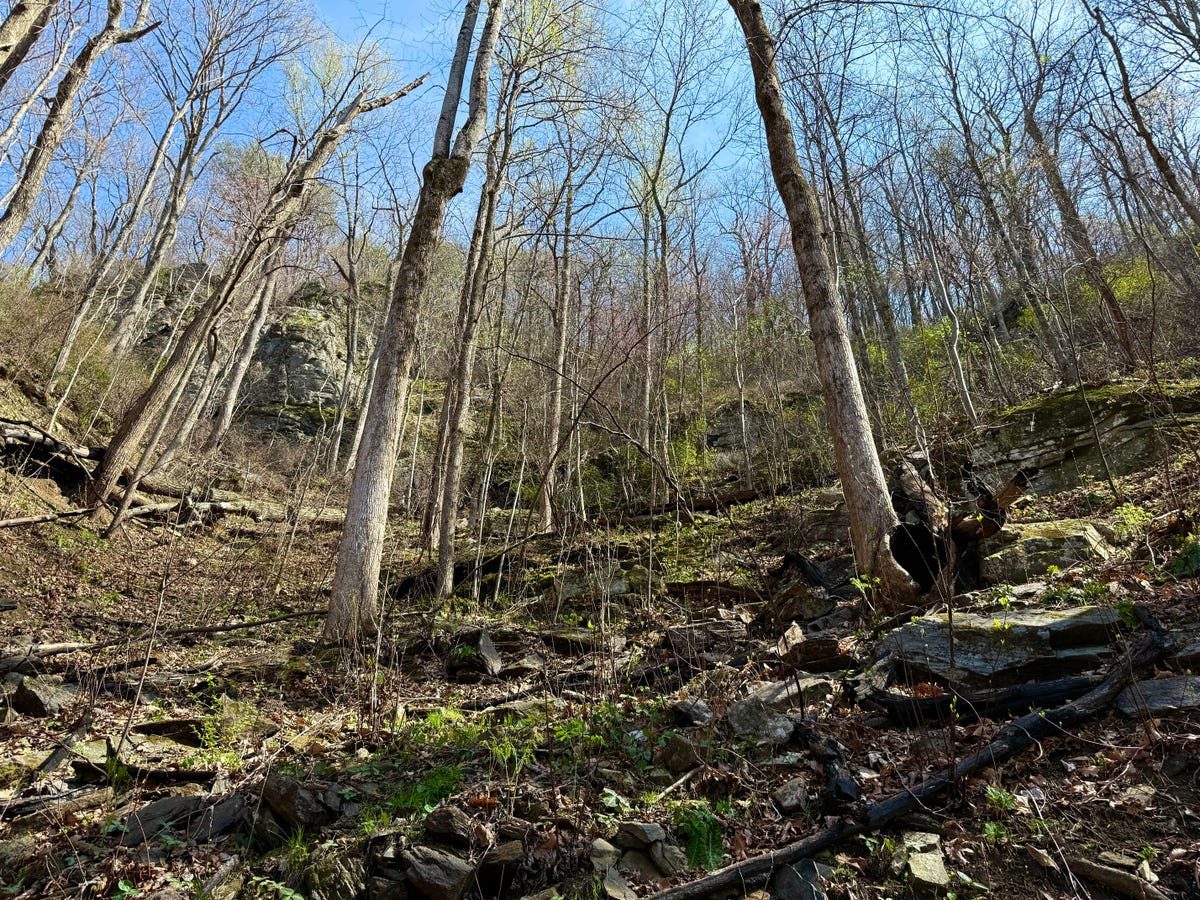
Karen-Eve also bought some land next to the Green River Game Lands in Polk County, where at one point she thought she would build a house. Instead, last year she conveyed this 62-acre parcel to Conserving Carolina, donating the lion’s share of its value. Additional funding came from the NC Land and Water Fund. In addition to conserving streams, wildlife habitat, and scenic views, Conserving Carolina is interested in the potential for a new public access point to the Game Lands in the future.
Karen-Eve said many developers have knocked on her door and sh could have made a lot of money selling it to one of them, but it would have broken her heart to see that land developed.
“There’s a mountain that will always have wildflowers and deer and bear and salamanders on it, that people will be able to go and enjoy for free,” she said. “I have received tremendous joy and education in my life from being on mountains.”
“I was raised very much that we are our brothers’ and sisters’ keepers. We are responsible for each other. And I’ve held onto that,” she says. “My core values are all about sharing and generosity and helping each other. And beauty — the beauty of the land and the beauty of nature.”
Reporting by Rose Jenkins-Lane, Special to the Citizen Times / Asheville Citizen Times
USA TODAY Network via Reuters Connect