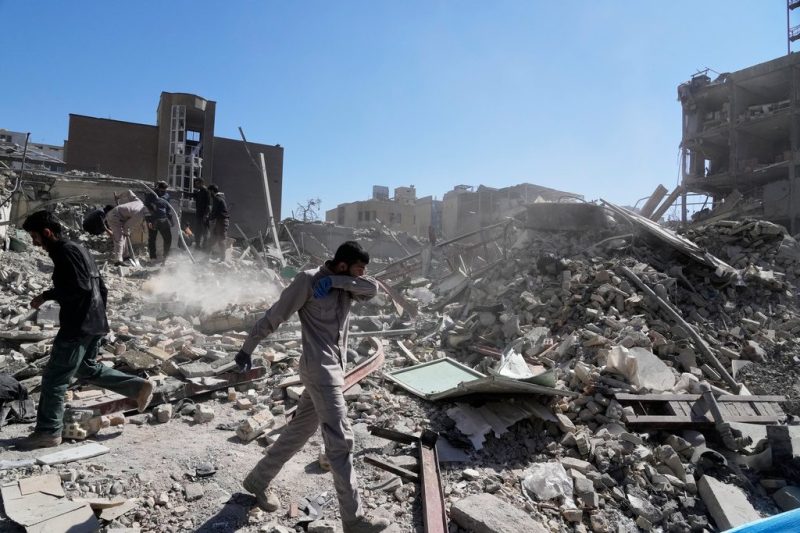
The madness of Trump’s war in Iran, and why North Carolina has so much to lose in the fighting.
In 1968, the footage of the Viet Cong’s Tet Offensive spurred many Americans to change their minds about the Vietnam War. Four years into the war, Americans thought we were wrapping up. Instead, our troops appeared to be in a desperate fight to preserve their own territory.
In Iran, however, the turning point for Americans might have been reached in the first 24-48 hours of the conflict.
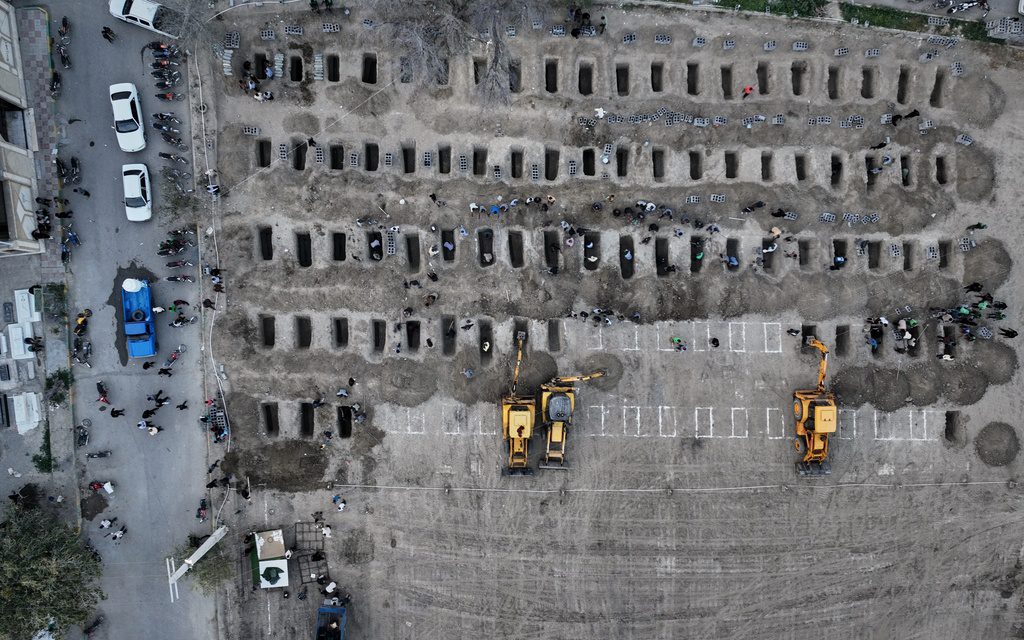
This week, international media (and some outlets in the US) broadcast images of a US-Israeli bombing that reportedly killed 160 children at a primary school in Minab, Iran. Look at the photos at your own peril. In one, a tiny blood-smeared arm pokes out of the rubble. Bloody backpacks are stacked in piles.
[optin-monster slug=”rgdyr2iwoc6i4fjovuok” followrules=”true”]
North Carolina—which has one of the largest active-duty military populations in the US—already has troops in the Middle East. More are surely on the way. They include a significant number of Marine, Air Force, and Army troops waiting for whatever comes next.
They are heading into a mess.
A United Nations panel said this week that it was “deeply disturbed” by the civilians that have already been killed in Iran, specifically in the Minab school bombing. War crimes may have been committed. It wasn’t the only devastation, but it was perhaps the most visceral.
An Iranian humanitarian organization said Tuesday that, since the bombing began Saturday, 787 people have been killed. At least six American service members are dead.
And President Trump says more will die before the end.
We don’t know what comes next. This president is notoriously unpredictable. We do know, however, that our troops are heading into a fight that most Americans don’t want.
A Reuters/Ipsos poll this week found that just one in four Americans support the strikes in Iran. The US casualties and the deaths in Minab are going to make the president’s war case even more difficult.
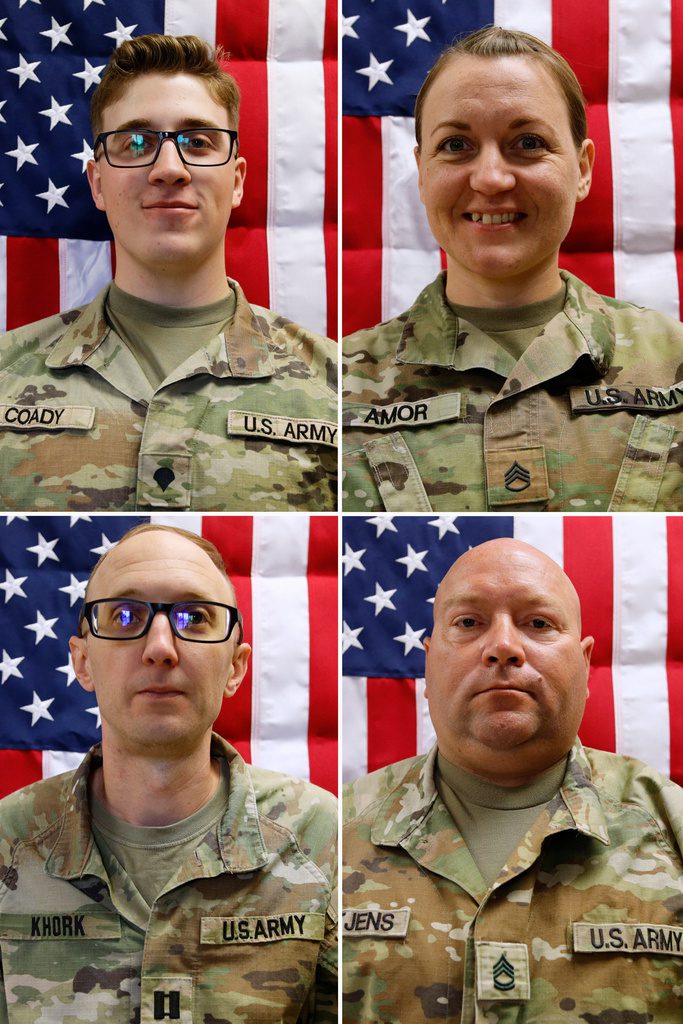
The Iranian government says the school was hit by US and Israeli bombs. The US has denied involvement, although White House spokeswoman Karoline Leavitt said this week that the US is investigating. [Update: Preliminary investigations indicate that the US was “likely” responsible for the Minab school bombing.]
The Israelis deny involvement too—though Israel has a history in Gaza of denying bombings of sensitive sites, such as schools and hospitals, despite irrefutable evidence to the contrary.
There is no good war, but it’s hard to imagine a war with a more inauspicious beginning than this.
The horrible truth—one that Americans are waking up to—is that none of the players are credible. Americans, especially North Carolina’s troops and its military families, are caught between one liar and another.
No ‘rally around the flag’ this time
Since 1979, Iran has been run by Islamic tyrants. The most recent of them, Ayatollah Ali Khamenei, was killed on the first day of bombings. Their history of deception and human rights abuses is long.
Israel, the US partner in Iran, has a documented history of killing civilians in Gaza. Public support for Israel plummeted during their brutal campaign in Gaza.
And in the US, even some of the most adamant Trump supporters have to acknowledge that trust is in short supply for his administration. He is an unpopular, lame-duck president, beginning a war that is in all likelihood illegal. Our allies could be described as reluctant at best.
Someone once told me that if you know your history, you’re never surprised by the news. But we don’t have to go deep into American history to find the problems ahead.
American conflicts tend to begin with a “rally around the flag” effect—meaning most Americans support the war in the early days. It is only after months or years go by that Americans sour on the fighting, as they did in 1968 after the Tet Offensive in Vietnam found American troops to either be in a stalemate or losing.
More recently, Americans lost faith in the wars in Iraq and Afghanistan the longer the conflicts went on.
This time, Americans started from a very different place. We are six days in. Trump isn’t calling it a war, but it looks and sounds like one. Whatever it is, Americans don’t like it. And the conflict widens every day.
Trump—a notoriously inconsistent leader—has been characteristically fickle in his reasoning for the conflict. The point is to dislodge the Iranian regime, he’s said, or it’s to protect Israel, or it’s to destroy Iran’s nuclear program.
You don’t have to have a degree in foreign policy to find the latter reasoning problematic. The administration has yet to provide any evidence of a dangerous nuclear program in Iran. The comparisons to the 2003-2011 war in Iraq practically write themselves.
And less than a year ago, the first time the Trump administration made the unilateral decision to bomb Iran, Trump bragged that the regime’s nuclear program had been “totally obliterated.”
Which is it?
And now, with the Minab school bombing, days into another Middle East conflict, we have credible allegations of atrocities that, according to the United Nations, might very well constitute war crimes.
Horrible wartime tragedies don’t always lead to a change in public sentiment. But what if they accompany a conflict most Americans already don’t want? What if the governments accused of perpetrating them—the US and Israel—suffer from a lack of credibility, including among their own allies?
No suspension of disbelief
We are, none of us, new to Donald Trump. He and his allies have lied to us about things we can clearly see, like the killings of US citizens by immigration agents in Minneapolis, the status of the economy, and the results of the 2020 elections,
They have lied about things that are plainly apparent, like the price of fuel.
If they lie about obvious things, how do they lie when we can’t see them? How do they lie when the events in question happen thousands of miles away in a country that most Americans can’t see or understand?
In the days to come, the media has a big job to do. It must tell the truth. Unsparingly. Tell it plain. Give us the images and the videos. Any journalist who suspends disbelief for the Trump administration is not a very good one.
In a more just world, nothing would shut down the “alpha male” posturing of US leaders faster than our slain American troops and the dead children in Minab, but the Trump administration appears undeterred. This week, Secretary of War Pete Hegseth—a Fox News TV personality who’s faced credible allegations of sexual assault—sounded like he was talking about a video game when he said “Operation Epic Fury” was “just getting started” in Iran.
Whatever they say, it is patriotic to ask questions of a war—no matter what—especially when it puts Americans at risk. It is human to ask those same questions when bombs target children and other civilians, wherever they might be from.
This is what happens in war, some will say. “Collateral damage” is inevitable. Deaths are inevitable. But what if it’s not fortitude to fight on and endure these things? What if it’s just madness?
Grieve for the dead in the Middle East. Grieve for the children who didn’t get a chance to make this world better, the mothers and fathers, the regular people who don’t want any part in these gruesome, global games but wake up homeless and childless today.
Grieve for the North Carolina troops—all the American troops—sent to a place far away because of the whims of mad men with no clear plan or exit strategy in sight. For the North Carolina families back home who are worried about their family members stationed in the Middle East, sirens blasting in the dead of night as missiles are launched nearby.
Grieve for the world. Grieve for us all.