Why a proposed data center in Fayetteville poses a risk to the environment, to neighbors, and to locals’ pocketbooks.
In our city, Energy Storage Solutions (ESS) is hoping to build a so-called “NetZero” data center. This data center is a threat to all of Fayetteville, and we must unite to oppose it for our health, finances and community.
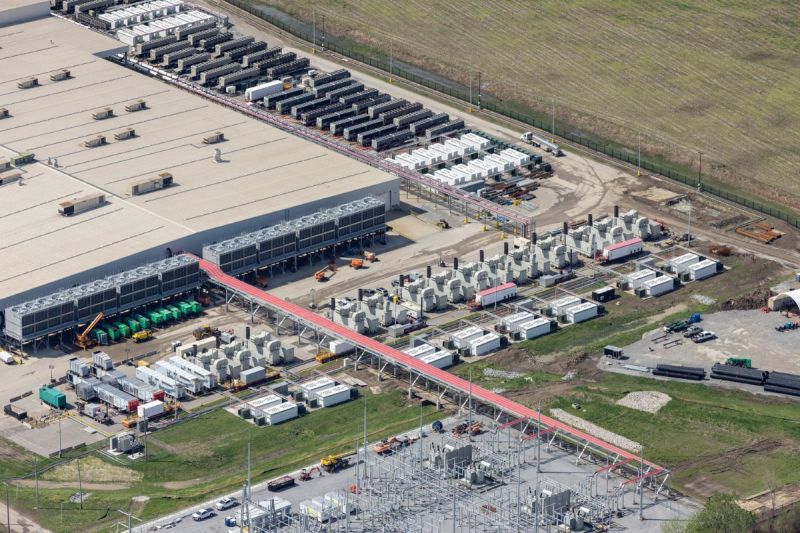
Data centers store the digital information behind websites, apps and AI services. Data centers are being built larger, more rapidly, and with less consideration for the people who live around them. A shocking example of this is Elon Musk’s xAI Colossus data center in Memphis, Tennessee. After construction, residents began reporting respiratory issues and the smell of gas, widely reported to be linked to the many, unpermitted gas-powered turbines that the data center had been running.
Spikes in toxic substances like nitrogen dioxide (NO₂) gas and fine particulate matter (PM₂.₅) were detected. NO₂ is a strong respiratory irritant that can worsen asthma and other respiratory diseases, and PM₂.₅ has been linked to premature death, heart attacks and respiratory illness. Despite community outrage and legal action, the gas turbines are still churning in Memphis, still polluting their community without consequence.
The Fayetteville data center project is hardly ‘green.’ That’s marketing.
Opinion: AG Jeff Jackson visits Fayetteville to remind FEMA a promise is a promise
Coming back to Fayetteville, ESS named its potential data center “NetZero” and touts it as a “green energy” project — but behind these marketing ploys, its proposal tells a different story. The data center will be powered entirely with gas turbines — eerily similar to Musk’s xAI data center. As seen in Memphis, this may lead to the emission of health hazards like NO₂, PM₂.₅, carbon monoxide and more. In its proposal, ESS offered no acknowledgement of these risks to our health and no solutions.
Additionally, ESS states that it will rely on Piedmont Natural Gas Company, Duke Energy and Public Works Commission lines. Such a project will likely require these companies to upgrade their infrastructure, and these expenses are often indirectly paid for by residents through utility bill increases. This means higher energy bills for ourselves and less money in our wallets at the end of every month in an already tight economy.
Data centers have also been connected to water shortages, noise pollution and nitrate contamination in drinking water. Fayetteville is already facing water supply challenges, which the data center can further intensify.
Data centers’ job creation is usually limited.
Instead of addressing any of these issues, ESS focuses on a supposed “carbon sponge” system, claiming that it will capture 130% of the carbon dioxide (CO₂) that the center will release. This seems entirely implausible as most carbon-capture systems aim for 90% and end up delivering far less, as low as 10-11% — or even releasing more CO₂ than they capture. Regardless, even if such a system were to exist, it cannot account for the other toxic substances like NO₂, PM₂.₅ and carbon monoxide that the data center could release.
So, poorer health, higher bills, noise pollution and more, but what would we gain in return? ESS says that it will bring a “large number of local jobs and significant tax revenues.” While tax bases can be boosted by data centers — often after receiving hundreds of millions in tax exemptions without public transparency — job creation is usually limited. Most data centers employ only 25 to 150 permanent workers, with many being specialists and contractors from out of state.
Protests have met similar proposals to the one in Fayetteville.
ESS has made an almost identical proposal to Tarboro. After extensive organizing by concerned residents, the Tarboro Town Council voted to block the project— to which ESS responded with a lawsuit to overturn the decision. Just 10 miles away in Kingsboro, ESS submitted another nearly indistinguishable proposal. The local board of commissioners is actively considering the proposal, planning a vote on the sale of county-owned land to ESS in the coming months despite community opposition.
Already, ESS is proving to be an unreliable partner. While the company had initially claimed that it would create 500 permanent positions, its documents indicate plans for only 69 jobs, with many being security or janitorial roles. ESS has also failed to disclose basic information affecting residents like the identity of the data center’s tenant and its projected water consumption. To support Kingsboro, please sign and share their petition and join their Facebook group.
Here in Fayetteville, many of us are still living with the consequences of GenX contamination. We have seen firsthand the impacts of corporate greed and indifference, leaving us to deal with the damage. We must act now and urge our leaders to reject this proposal for the sake of our health, finances, and community.
Far away, figures like Sam Altman and Elon Musk rationalize these data centers as a necessary step towards an AI-powered utopia. And, AI is certainly here to stay — used by everyone from mother to my octogenarian boss to myself. But, we still have the right and the responsibility to decide how it develops in our communities and who bears the costs.
If you agree, please consider signing this petition (bit.ly/faydata) to protect our community. If you would like to stay updated and help organize, please join the Facebook group (bit.ly/faydatafb).Rashad Rahman lives in Fayetteville.
Reporting by Rashad Rahman, Fayetteville Observer / The Fayetteville Observer
USA TODAY Network via Reuters Connect