For more than 150 years, the Greensboro Farmers Curb Market has brought local farmers and families together, making it the oldest and most enduring market in the city.
As the oldest farmers’ market in Greensboro, it has outlasted countless shifts in the region’s economy, from the rise of grocery chains to the spread of suburban shopping centers, all while fostering direct connections between local growers and the community they feed.
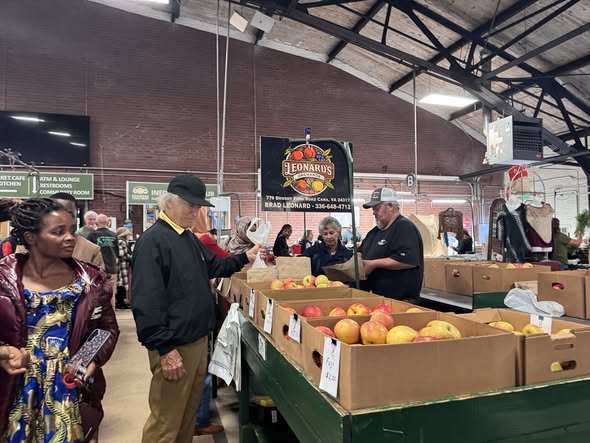
Each Saturday morning, shoppers can experience a living piece of Greensboro’s history, still full of the same energy that first gathered farmers and neighbors together in the 1870s.
Its longevity isn’t an accident. The market has continually adapted to the needs of Greensboro’s residents—moving locations as the city grew, expanding its vendor base, and welcoming new generations of farmers, bakers, and makers. Yet it has never lost the simplicity that made it essential in the first place. People for tomatoes or honey or cut flowers, and also for the chance to meet the people who grow them.
Over the years, the Curb Market has become a cultural anchor as much as a shopping destination. As it continues into another new year, let’s dive into what makes this 150-year-old market so special.
The Early Days of The Greensboro Farmers Curb Market
The Greensboro Farmers Curb Market traces its origins to 1874, when the city of Greensboro, North Carolina, established a city market for local producers. On May 13, 1874, a city committee was appointed to set up the market. Shortly after, the city purchased a lot and built a market building that accommodated 20 vendor stalls, located on the east side of the business district.
As demand grew, business spilled over beyond the original building. Vendors spread into alleys and adjoining streets. The lack of a central building eventually made the informal market layout unsustainable.
Thus, from the beginning, the curb market was conceived as a way for local farmers and producers to sell directly to city residents—a foundation that continues to support the market today.
The Greensboro Farmers Curb Market in the Mid-20th century
By the 1940s, the market had become a vital part of Greensboro’s local food distribution, at a time when many grocery stores and chains were still clustered downtown. Amid growing demand and urban change, the city responded during WWII to calls for a more organized, contained marketplace. A new facility was constructed and officially opened on June 24, 1944, drawing a crowd of about 2,000—possibly the largest single-day attendance up to that time.
Later, the curb market moved into an even more permanent home. In 1963, it was relocated to the old National Guard Armory building on Yanceyville Street at an intersection with Lindsay Street, where it has remained ever since. This move provided a stable, indoor space and helped the market weather the changes of post-war urbanization and the rise of supermarkets.
New Moves for The Greensboro Farmers Curb Market in the Modern Era
After decades of municipal oversight, in 2012, the city began contracting with a private nonprofit to manage the market. That nonprofit—Greensboro Farmers Market, Inc. (GFM)—continues to run the Curb Market on behalf of the city.
In 2017, GFM was officially selected to manage the market for another multi-year term, a reflection of its evolving role as both a market manager and a community-building organization that seeks to expand the market’s reach and inclusivity.
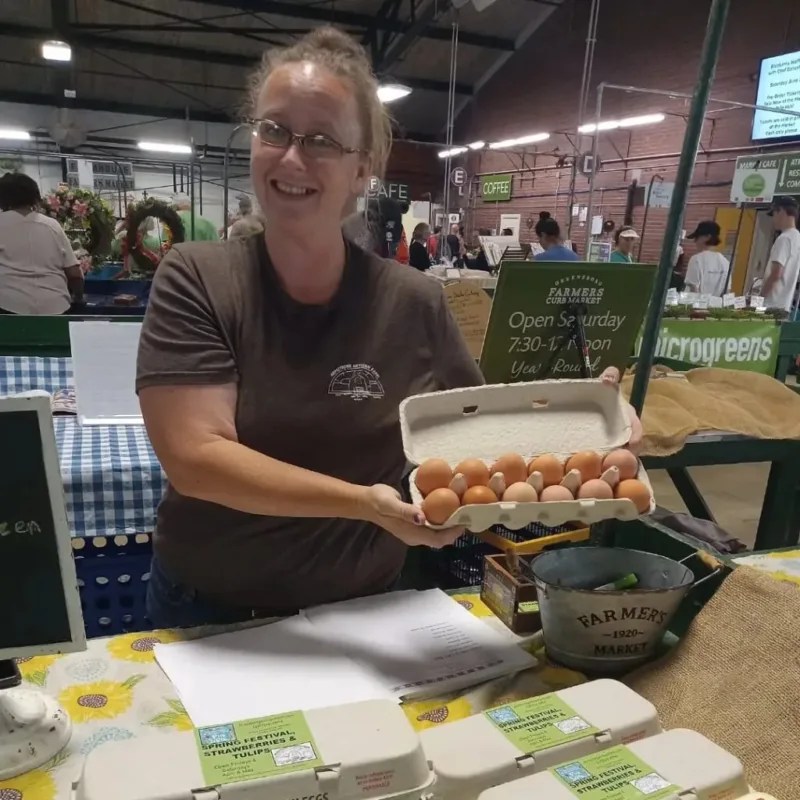
Today, the Curb Market is defined as a “producer-only” market. All products sold originate within around 100 miles of Greensboro and are grown or made by the sellers. The market currently features approximately 175 vendor tables; hosts 100+ vendors, including farmers, artisans, bakers, and crafters; and draws around 250,000 visitors annually.
Thus, the Curb Market remains deeply rooted in local agriculture and craftsmanship, much like it was in the 19th century, while adapting to modern needs and community values.
The Community Significance of The Greensboro Farmers Curb Market
The market has long served a purpose far beyond selling produce. As described in a 1994 reflection by longtime shopper and academic Dorothy Mason, Saturday mornings at the Curb Market are “a festival atmosphere,” a place where people of different socioeconomic backgrounds come together and connect.
Many customers have long family histories at the market: in her study, Mason found that 74 % of respondents had shopped there for five or more years, 32 % for over twenty years, and a handful for forty to fifty years. Some respondents even traced their visits back to childhood.
The market has served as a cultural anchor in Greensboro. Over generations, its vendors and patrons have developed relationships that span decades. As one longtime vendor reportedly said: “I’ve been here so long, nearly everybody here is a friend of mine.”
Reflecting its importance, in August 2025, the city formally recognized the Curb Market during National Farmers Market Week, commemorating 150 years of continuous operation and celebrating its contributions to community, local economy, regional agriculture, and food accessibility.
The Greensboro Farmers Curb Market Today
The mission of the Greensboro Farmers Curb, under GFM’s stewardship, emphasizes supporting local producers, ensuring equitable access to fresh foods such as produce and farm-fresh eggs, sustaining regional agriculture, and fostering an inclusive community.
In 2024, the market celebrated its 150th anniversary—“150 years and counting”—with special events, including a community cookbook project compiling recipes, memories, and market traditions.
Currently, the market runs year-round on Saturdays from 8 a.m. until noon, and seasonally on Wednesdays (typically from April through October). On December 14, the market will open for a special MADE 4 the Holidays event from 10 a.m. – 4 p.m., with an “Early Bird” hour available for a small fee.
The market accepts SNAP/EBT and offers matching funds through programs like Market Match and Crop Cash, essentially doubling your EBT dollars for fresh produce, making your money go further for healthy foods.
The history of the Greensboro Farmers Curb Market is a window into how a city and its surrounding rural region have stayed connected across time. From its 19th-century roots to mid-century institutionalization and modern nonprofit stewardship, the market demonstrates how local food, community, and culture can endure.