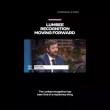
Republicans control both chambers of the NC legislature, but have failed to pass a budget 6 months after it was due. Even conservatives are losing their patience.
As a winter storm shut down schools across the Triangle this week, Republican leaders in the General Assembly were still bickering over the state budget that was due in the dead of summer.
Republicans control both chambers of the General Assembly, but for the last six months they have been unable to agree on a comprehensive budget—the foundational document that ensures the state’s bills are paid. Current state programs are being funded through reserves and mini-budgets, but teachers have not gotten raises and Medicaid faces a huge fiscal cliff that is rapidly approaching.
North Carolina is the only state in the country without a comprehensive budget.
While NC Democrats have long criticized Republican leaders for the impasse, even some conservatives and business groups are losing their patience with the “dysfunctional” legislature.
“With Republican majorities in both chambers, failure to reach a budget agreement is embarrassing — and, worse, it impacts millions of North Carolinians,” Brian Balfour, a vice president of research for the conservative John Locke Foundation, wrote in a recent op-ed.
The NC Senate and House each unveiled their budget proposals in the spring. The House version had bipartisan support and drew some praise from Gov. Josh Stein, a Democrat.
So why is there no budget? Because Phil Berger, the NC Senate majority leader, and Destin Hall, the Speaker of the House, arguably the two most powerful politicians in the state, have been unable to reconcile the differences between their chamber’s versions.
While a legislative session is on the schedule for Dec. 15, it is unclear if lawmakers will actually return, the Carolina Journal reported. And in a recent op-ed, Hall said there were “significant” differences between the competing budgets, and suggested that many Senate provisions strayed from the “conservative, responsible path.”
“Recent reports indicate there is no appetite among legislative leaders to return to Raleigh the rest of this calendar year, leaving the budget and several other important issues unaddressed,” Balfour said.
“Let’s face it: The General Assembly has become dysfunctional,” he added.
‘These are not small inconveniences.’
Passing a budget is among the most essential tasks a legislature has, Algenon Cash, the managing director of the investment banking firm Wharton Gladden & Company, wrote for the conservative Carolina Journal.
The lack of a budget is a dereliction of duty, Cash wrote.
“When the legislature fails to pass a budget — not because of divided government, but because of internal disagreements — it directly undermines the very image of competence and stability that Republicans have spent years building,” he wrote.
“A delayed budget means teachers and state employees won’t see their promised raises. Hospitals and doctors are left with uncertainty about Medicaid rates at a time when rural providers are already under strain. Road improvements and construction projects stall. Universities delay capital expansions. Local governments pause decisions because they can’t forecast what the state is doing,” Cash added.
“These are not small inconveniences; they are real disruptions felt by voters in the state.”
While state law ensures that previously approved programs are funded even without a new budget, that money is not forever. It runs out. And old budgets mean no new raises for teachers and other state-funded employees. North Carolina teachers are already among the worst paid in the country, and, like most people in the country, their expenses are rising.
‘Empty stockings’
The House budget bill has bigger raises for teachers than the Senate version, one of the main sticking points.
The longer the budget is delayed, the larger the damage done, but teachers are in the most direct path of the steamroller, Douglas Shackelford and Paul Fulton, former deans of UNC’s Kenan-Flagler Business School, wrote this month.
“While every other state managed to fund its schools, its workforce and its essential services, Raleigh gridlocked itself into failure. And ordinary North Carolinians – especially our teachers – will pay the price,” they wrote in Public Ed Works.
“Both chambers admitted teachers deserve more. But even with broad agreement that salaries must rise, lawmakers – particularly those in the Senate – still failed to do the one thing needed to deliver those raises: pass a budget.”
North Carolina teachers spend more of their own money on school supplies than their peers in all but one other state, so as costs rise across the board and with their health care premiums likely to rise, denying teachers a raise is the same as cutting their pay.
“Every teacher and every state worker in North Carolina will get nothing,” Shackelford and Fulton wrote.
”There might be some empty stockings this Christmas.”