Without additional funding, some of North Carolina’s most vulnerable residents who rely on Medicaid could see their coverage be cut or be forced to delay essential care.
Republican leaders in the North Carolina General Assembly refused Gov. Josh Stein’s recent order demanding they hold a special session to address the state’s urgent Medicaid shortfall.
Stein, who under state law can order lawmakers to return to the legislature but can’t order them to hold a vote, issued the rare move last week, highlighting the harmful effect of the cuts in reimbursement rates his administration made to Medicaid providers. The cuts came after Republican leadership failed to pass a budget to fill a shortfall in the state’s Medicaid program.
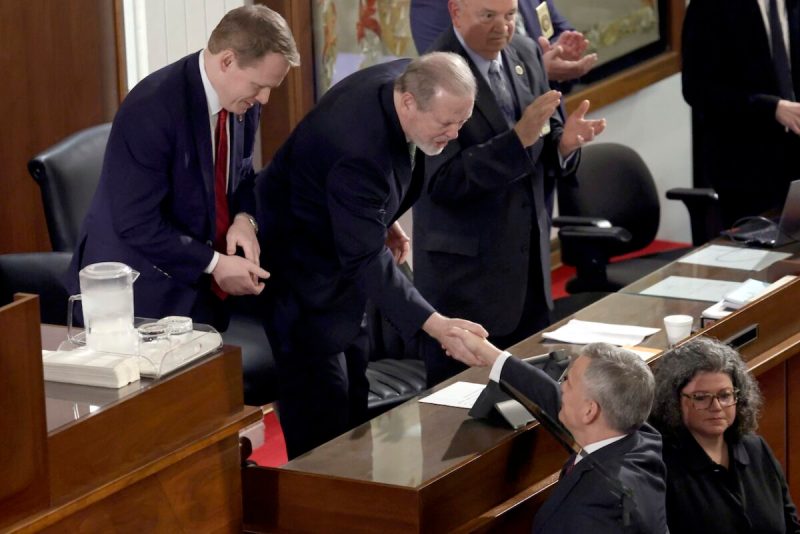
Phil Berger, the NC Senate majority leader, and NC House Speaker Destin Hall sent a letter to Stein on Thursday, saying Stein could not call a special session because lawmakers technically were still in the previous session. There will be some activity in the legislature on Nov. 17, but no votes. And the governor can’t make them vote, they said.
State law says special sessions can be called only in “extraordinary circumstances.” Berger and Hall said these circumstances were not extraordinary.
“If circumstances surrounding the Medicaid rebase are in fact extraordinary, it is only in the context of your administration’s failure to address them,” they said.
Republicans have a majority in the House and a supermajority in the Senate and the budget was due in July.
Cutting the rates the state pays to Medicaid providers forces them to either delay essential care or stop taking Medicaid patients entirely.
A “mini-budget” passed by the NC General Assembly at the end of July fell $319 million short of what the state needs to pay Medicaid providers. State health officials warned lawmakers that unless they filled that gap with new legislation, they would have to make steep cuts on Oct. 1 in order to avoid catastrophic cuts later on.
Lawmakers dismissed those concerns. When legislators to Raleigh returned the last week of September, the House and Senate passed separate bills intended to fill the gap. The votes were unanimous in both chambers. Not a single lawmaker voted against either bill.
But Berger and Hall could not resolve the relatively minor differences between their respective chamber’s versions, and no final bill was passed. Then lawmakers left town again.
When they returned at the end of October, they passed a new, highly partisan congressional map to try and gerrymander Rep. Don Davis out of the US House, but they could not come to an agreement on Medicaid or a larger budget, that among other things, would provide pay raises to teachers.
All lawmakers agree these Medicaid cuts are devastating, and in their October session, House Republicans lamented they could not reach accord with their Senate counterparts.
“Speaker Hall and Leader Berger would rather come up with any excuse than fund Medicaid for the people of North Carolina,” Stein said on X on Friday.
“Patients, providers, and their families are counting on the legislature to act, not abandon them in their time of need. Let’s get this done. I urge all North Carolinians to make their voices heard; tell your legislators that you demand them to do their job.”
‘They do not have a plan’
Democratic lawmakers also hammered their Republican colleagues.
“I’m disappointed but sadly, unsurprised, at the lengths Republicans in the General Assembly will go to avoid doing the most basic parts of their jobs,” NC Rep. Phil Rubin, a Wake County Democrat, said in an emailed statement.
“It’s even worse because this Medicaid crisis is Republicans’ own doing. Medicaid is underfunded because of Republican dysfunction in a legislature they solely control. North Carolina is the only state in the nation to have failed to pass a budget.”
NC Rep. Robert Reives, the House minority leader, said in a statement online that there will be “be serious repercussions for North Carolina due to Republican inaction on health care.”
He added: “They do not have a plan and North Carolinians will have to foot the bill because of it.”
‘Infuriating’
Nearly 4,000 North Carolina children with severe disabilities rely on Medicaid for the expensive and extensive health care that allows them to live at home with their families rather than in some facility far away. Once the cuts went into effect, it became harder to ensure the nurses keeping them alive and in their homes would be available.
Stacy Staggs has been trying to sound the alarm for months about what Medicaid cuts would mean for her 11-year old daughter, Emma.
Emma is on Medicaid through a home care waiver program, and it pays for her feeding tube and the nurse who comes to her home every day so that her parents can work. Emma needs around-the-clock supervision.
“My hope is dwindling,” Staggs told Cardinal & Pine in September. “It feels like the doors are closing.”
In a text message on Nov. 4th, Staggs said that feeling had only gotten worse.
“I’m feeling that more and more by the week,” she said.
“If doctor’s offices stop taking Medicaid ON THE WHOLE these dominoes will fall fast,” she added.
In a follow up text after Hall and Berger said they would not move on Medicaid, Staggs reached out to Cardinal & Pine again.
“It looks like the House and Senate have washed their hands of it,” she wrote, even though the next step “still sits with them, right?”
She added: “Which makes their refusal … all the more infuriating.”