A recount has been ordered, but the 625-vote margin is likely too big for Republican Jefferson Griffin to make up.
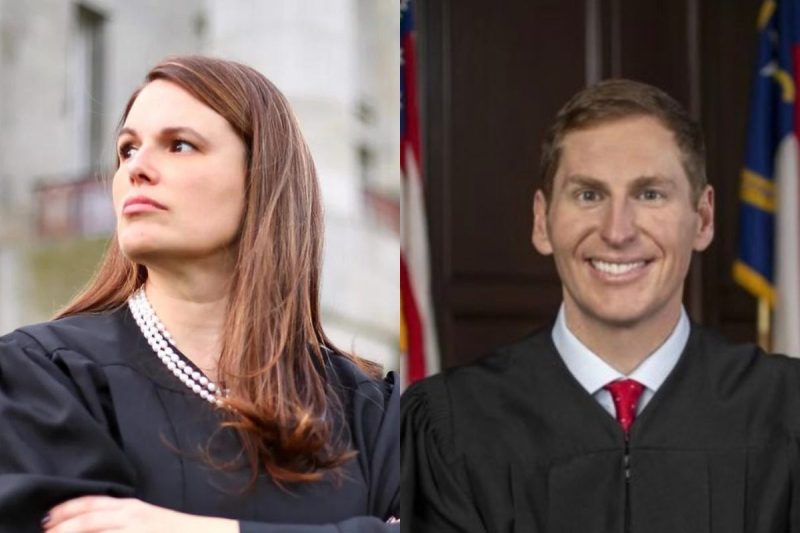
At the official end of the state’s vote-counting process, Supreme Court Justice Allison Riggs, a Democrat, leads her Republican opponent Jefferson Griffin by 625 votes, a margin small enough to qualify for a recount but likely too large for it to make a difference.
Riggs currently has 2,770,818 votes to Griffin’s 2,770,193.
The race, an election with huge implications, was the closest statewide contest by far.
The election will not alter the makeup of the court, where Republicans currently hold a 5-2 majority. But if Riggs wins, Democrats can flip control of the court in 2028. If Griffin overcomes the margin, either through a recount or through legal challenges, Republicans can maintain control for a decade.
The recount will start on Wednesday.
Republicans, however, are also likely to file lawsuits contesting some aspects of the vote counting process in hopes that the issue ultimately goes before the right-wing state supreme court.
Griffin filed one lawsuit already, accusing the North Carolina Board of Elections of not giving him information he needed to decide whether or not to seek a recount, but a spokesman for the Board said it had given him the info he requested.
Griffin officially requested a recount on Tuesday.
The results are not fully official until after the recount, and Riggs has not yet declared victory.
But North Carolina Democrats have.
“North Carolina voters have spoken and Justice Allison Riggs has been elected to keep her seat on the North Carolina Supreme Court,” Anderson Clayton, the chair of the NC Democratic Party, said in an emailed statement on Tuesday.
“This is a huge win for North Carolinians and the future of our state. Voters know Justice Riggs provides a last line of defense for our democratic values and protects our rights. We are confident that the recount will confirm Justice Riggs’ victory, and fulfill the will of the people who made this win possible.”
She added: “Let this race serve as a reminder that every vote counts.”
A thorough count takes time
The vote counting and verification process in North Carolina is deliberate, thorough, and exacting. It’s how North Carolinians can trust that elections are free, secure, and fair.
Griffin led Riggs on Election Night based only on Early Voting and Election Day numbers. But there were tens of thousands of provisional ballots and absentee ballots yet to be counted. These legal votes were cast before the polls closed, but state law did not allow them to be counted until AFTER polls closed.
As each county combed through the ballots, the margin shrunk and shrunk until Riggs pulled ahead.
It’s not unusual for a local race to see lead changes during the canvassing period, and while it is not as common for statewide races, where the margins tend to be bigger, it’s not unheard of.
The same process in 2020 saw Paul Newby, a Republican, defeat Democrat Cheri Beasley in the race for chief justice of the Supreme Court in much the same way: after an intense canvassing period in which the lead between the candidates switched back and forth as provisional ballots were counted. Newby ultimately won that race by 401 votes.