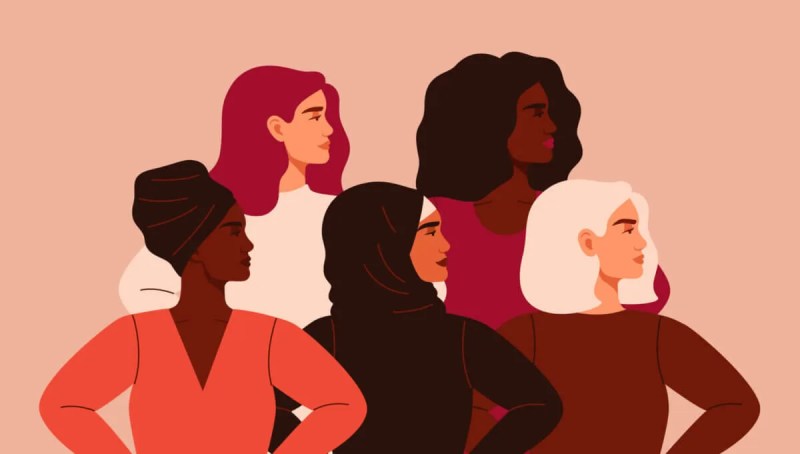
This Breast Cancer Awareness Month, a wake-up call about the startling racial disparities for people diagnosed with breast cancer.
Sunday, September 25, I underwent my first annual breast MRI—which my gynecologist suggested I have since I am genetically predisposed to breast cancer: both of my grandmothers had it, and my paternal aunt is currently living with it—after already having had brain and cervical cancer.
One week later, Monday, Oct. 3, I was back at the imaging center undergoing a biopsy on my right breast. There was a spot—not quite a mass, but a questionable spot—the radiologist needed to examine.
I was not nervous. I did not pray. I wasn’t afraid—although the thought of having to have an IV for the required contrasting made me nauseous.
Instead, I was making peace with the possibility of living with one breast—like Nikki Giovanni and my grandmother Mary, who, at 42 years old, insisted on excising her cancerous breast and foregoing the recommended radiation; she lived another 40 or so years after her cancer diagnosis.
Nevertheless, after the 45-minute biopsy, which required me to lay stone still on a retractable scanning table with my questionable breast fastened between a compressor, like a slab of tofu being pressed—all the while a medical practitioner pushed dye into my arm, another numbed and retrieved samples from my breast, and a third rubbed my back and cupped my hand, which loosely held the panic button should I need to free myself from the claustrophobic inducing space ringing with noise—I prayed for our grandmothers: “Blessed are our elders who have to endure breast MRIs,” I said.
The entire process was more than a notion, one I don’t want to have to undergo ever again.
Immediately after it, I had to have a mammogram at the neighboring breast center to ensure the titanium clip that was placed where the biopsy was drawn was secured, thus identifying the cancer’s exact location should that spot be malignant.
I had not realized until I checked in for my mammogram and the desk clerk handed me a pack of seeds embedded into a pink bra that, when buried, would bloom into wildflowers, that I was moving through these invasive procedures during October’s National Breast Cancer Awareness Month.
“Like scattered seeds, memories bloom forever. Bury the bra!” read the packaging—and my original prayer for our grandmothers became an ancestral calling of Black women buried after “losing their battle with cancer”: Grandma Rose, Audre Lorde, June Jordan, Lucille Clifton, Margaret Walker, Lorraine Hansberry, Barbara Christian, Gwendolyn Brooks, Bebe More Campbell.
And I thought, too, of the medical apartheid that buried and buries Black women used as experiments—when they aren’t being neglected all together—in a medical industry that deems Black women’s bodies wild and wayward—although (the non-consenting) Henrietta Lacks’ cancerous cells generated the world’s first immortalized human cell line, thus contributing to the development of life-saving vaccines; she does not flood October’s pink washing.
And so, Henrietta Lacks, who died at 31 of cervical cancer, is not a memory that gets to bloom forever.
Thus, her Black body is barely remembered nor is it centered in America’s fight against cancer—even though Black people are more likely to die from most cancers and to live the shortest amount of time after a cancer diagnosis than any other racial/ethnic group in America.
Instead, October remembers white women like Susan G. Komen, whose sister, Nancy Brinker, organized a breast cancer awareness foundation three years prior to the American Cancer Society’s 1985 national promotion, and nine years before Janelle Hall’s 1991 founding of the National Breast Cancer Foundation.
Albeit, October is breast cancer awareness month, and white women are more likely to develop breast cancer than Black women, Black women are more likely to be diagnosed with more aggressive, advanced stage forms of breast cancer and are less likely to be treated in a timely manner—if treated at all—because of socioeconomic conditions that prohibit and/or limit Black women’s access to suggested pre-screenings, medical treatment, healthy diets, information, stress-free living and working environments, humane medical professionals.
In other words, more Black women than white ones die from breast cancer than any other cancer, which, says cancer.org, is rooted in America’s racist structures.
So, while Susan G. Komen (for the cure) helps to inform women about breast cancer prevention and assist them with navigating the medical industry, it has yet to cure the cancer that brims the breast of America’s racist capitalist patriarchy.
According to the CDC, breast cancer mortality is 41% higher amongst Black women compared to white women. Additionally, reports from Breast Cancer Prevention Partners found that Black women diagnosed with cancer have a 31% mortality rate compared to any U.S. racial or ethnic group, and those of us 45 years or younger are more likely to have breast cancer than white women that age.
According to cancer.org, from 2016-2020, the breast cancer death rate was higher for Black women in every U.S. state, except Washington. Further, they report, while 88% of white women live at least five years after a regional stage breast cancer diagnosis, only 78% of Black women do.
With all these stats from varying organizations and reports, one would think Black women would center the fight against breast cancer—that more of our faces and our narratives would be flooding October’s awareness.
Undoubtedly, while exploiting and commodifying cancer and cancer patients will not cure one of cancer, it has contributed to the decrease of white women’s mortality rates.
Thus, because the media is the most influential teacher—more far-reaching than any traditional classroom setting—Black women need to be just as visible in cancer awareness campaigns as they have been on syrup bottles and Popeye’s chicken advertisements.
And I know there’s so much more—so much more—that needs to be done to counter America’s race matters; however, especially because the COVID-19 pandemic has further widened health disparities between Black people and others, which will worsen cancer disparities, the Black woman’s fight against cancer needs to be scattered throughout America’s mass communications just as wildly as those packaged seeds the desk clerk handed me while I was registering for my mammogram.
Black women don’t have to keep losing the battle, and they definitely shouldn’t be remembered because the medical industry forgot them.
While folks are being awakened to America’s racial pandemic, let’s, too, keep them abreast of what’s happening (or not) with Black women and breast cancer.